Lepidlo na zuby: Co se skrývá za fixací korunek a jak to funguje
When you hear lepidlo na zuby, speciální materiál, který udržuje zubní korunky, mosty nebo náhrady na místě. Also known as zubní cement, it isn't glue from the hardware store — it's a medically engineered compound designed to bond with tooth structure, resist saliva, and hold under chewing pressure. Many people think any strong adhesive will do, but that’s how you end up with a crown in your coffee cup. Dental cement is not just sticky — it’s biocompatible, antimicrobial, and engineered to last years, sometimes decades, under constant stress.
Behind every secure crown is a type of zubní cement, speciální látka používaná k fixaci zubních náhrad, která zajišťuje pevnost, těsnost a ochranu před bakteriemi. There are different kinds: glass ionomer cements that release fluoride to protect the tooth underneath, resin-based cements for high-strength bonding, and zinc phosphate for traditional use. Each has its place depending on the tooth, the crown material, and whether the patient grinds their teeth. A crown isn’t just glued — it’s chemically bonded. That’s why you can chew steak with it and not worry. But if the cement fails, it’s rarely because the glue was weak — more often, it’s because the tooth underneath was decayed, the crown didn’t fit right, or the patient didn’t clean around it properly.
That’s why fixace koruny, proces, při kterém je zubní náhrada trvale připevněna k přirozenému zubu pomocí speciálního cementu. isn’t a one-time job. It’s the result of precise preparation, perfect fit, and proper technique. If your crown falls off, don’t try to re-glue it with superglue. Don’t even try to stick it back with toothpaste. Go to your dentist. The cement might be old, the tooth might be crumbling, or the crown might be cracked. And if you wait too long, bacteria can get in — and that’s when you start losing bone, not just a crown.
Most people don’t realize that zubní korunka, náhrada, která obaluje poškozený zub a obnovuje jeho tvar, funkci a estetiku. is one of the most common restorations in dentistry. But its success depends entirely on what’s underneath — the cement, the tooth structure, the hygiene. No amount of fancy marketing makes up for poor fit or bad cement. That’s why some crowns last 20 years and others fall off after two. It’s not luck. It’s science.
And if you’ve ever wondered why your dentist doesn’t just use regular glue — now you know. This isn’t about sticking things together. It’s about protecting your tooth for life. The right cement seals out bacteria, supports the tooth, and lets you eat, laugh, and speak without fear. But if you feel your crown wobbling, if you taste metal, or if you see a gap — don’t ignore it. That’s your body telling you something’s wrong.
In the posts below, you’ll find real answers about what happens when a crown comes loose, how dentists choose the right cement, why some crowns fail faster than others, and what you can do at home to make yours last. No fluff. No myths. Just what actually works.
Jak použít lepidlo na zuby správně - krok za krokem pro nasazovací zuby
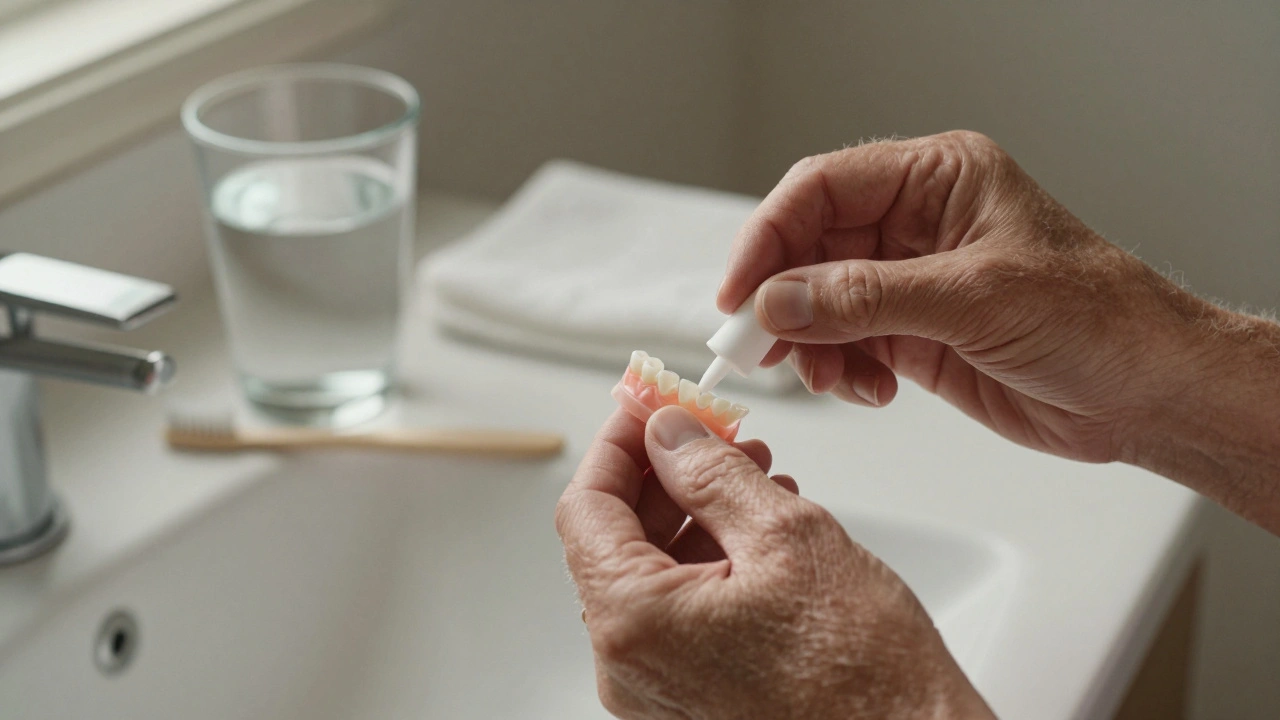
Zjistěte, jak správně používat lepidlo na zuby pro nasazovací protézy - krok za krokem, co dělat, když se hýbou, jak vybírat bezpečné lepidlo a kdy je čas na novou protézu.
Více